

High-Density Spray Foam: The Best Choice for Strong, Long-Lasting Insulation
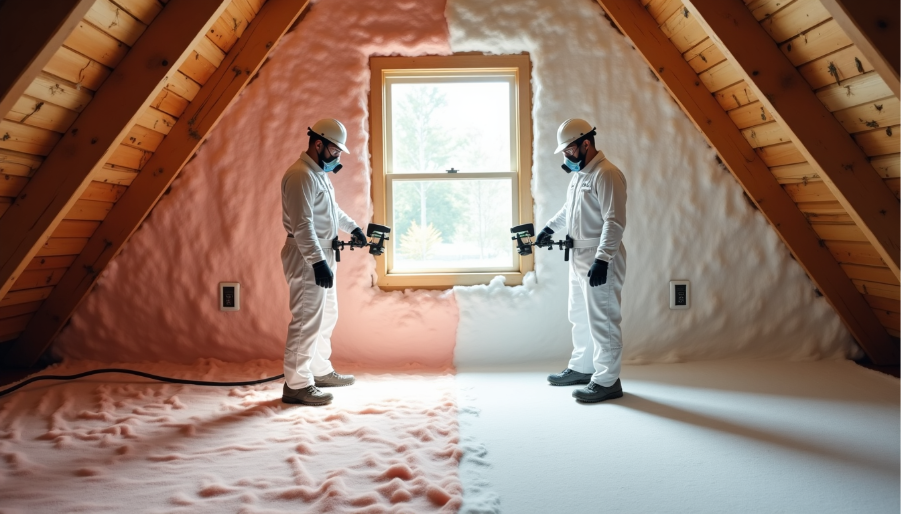
In today’s construction and renovation landscape, insulation is no longer just about keeping indoor spaces warm during winter or cool in summer. It has become a critical component of building durability, energy efficiency, indoor comfort, and long-term cost savings. Among the many insulation options available, high-density spray foam insulation stands out as one of the most effective and reliable solutions for both residential and commercial buildings.
High-density spray foam is widely recognized for its superior strength, moisture resistance, and long lifespan. Unlike traditional insulation materials that may degrade or shift over time, high-density spray foam forms a solid, continuous barrier that enhances the structural performance of a building while delivering exceptional thermal insulation.
Trusted insulation providers such as GTA Foaming specialize in advanced spray foam solutions designed to meet the demands of modern buildings and long-term performance expectations.
This article explores what high-density spray foam is, how it works, and why it is considered the best choice for strong, long-lasting insulation.
Understanding High-Density Spray Foam Insulation
High-density spray foam insulation is a closed-cell polyurethane foam that is applied as a liquid and rapidly expands to form a rigid, solid layer. Once cured, it creates a dense insulation barrier that adheres tightly to surfaces, filling gaps, cracks, and voids that traditional insulation materials often miss.
What distinguishes high-density spray foam from other insulation types is its density and strength. It is typically denser than open-cell spray foam and many conventional insulation materials, giving it superior durability and resistance to moisture and air infiltration.
High-density spray foam is commonly used in demanding applications such as roofs, exterior walls, foundations, basements, crawl spaces, and commercial buildings where long-term performance is critical. These applications often require experienced spray foam contractors who understand how to apply the material correctly for maximum effectiveness.
Why Density Matters in Insulation Performance
The density of insulation plays a major role in how well it performs over time. Higher density means greater resistance to air movement, moisture penetration, and physical damage.
High-density spray foam creates a rigid structure that does not sag, compress, or shift after installation. This stability ensures that the insulation continues to perform at the same level for decades, unlike loose-fill or batt insulation that can lose effectiveness due to settling or gaps.
Because of its dense composition, high-density spray foam also offers a higher R-value per inch compared to many other insulation materials. This means it provides greater thermal resistance in thinner layers, making it ideal for spaces where insulation depth is limited.
Superior Energy Efficiency and Thermal Performance
One of the most important advantages of high-density spray foam insulation is its exceptional energy efficiency. Heat loss and heat gain are often caused by air leakage through small gaps, cracks, and joints in a building’s envelope. Traditional insulation materials may slow heat transfer, but they often fail to stop air movement completely.
High-density spray foam acts as both insulation and an air barrier. When applied, it expands to seal even the smallest openings, creating a continuous thermal envelope around the building. This significantly reduces air leakage, which is one of the leading causes of energy waste.
By maintaining stable indoor temperatures, high-density spray foam reduces the workload on heating and cooling systems. As a result, buildings consume less energy, leading to lower utility bills and improved energy efficiency throughout the year.
Long-Lasting Durability and Structural Strength
• High-density spray foam provides both insulation and added structural strength
• Once cured, it hardens into a rigid layer
• Bonds firmly to wood, concrete, and metal surfaces
• Reinforces walls and roof assemblies
• Improves resistance to wind uplift and structural movement
• Enhances building resilience in harsh weather conditions
• Maintains shape and performance for decades
• Does not rot, break down, or deteriorate over time
• Resistant to pests and environmental damage
• Serves as a long-term investment in building durability
Exceptional Moisture and Water Resistance
Moisture control is one of the most critical aspects of insulation performance. Excess moisture can lead to mold growth, structural damage, and poor indoor air quality. High-density spray foam excels in this area due to its closed-cell structure.
The closed-cell composition prevents water absorption and limits vapor transmission. This makes high-density spray foam highly effective in basements, crawl spaces, foundations, and exterior walls where moisture exposure is common.
By creating a moisture-resistant barrier, high-density spray foam helps protect building materials from water damage and reduces the risk of mold and mildew. This contributes to a healthier indoor environment and extends the lifespan of the building.
Improved Indoor Comfort and Temperature Consistency
Indoor comfort is about more than just temperature. Drafts, cold spots, and humidity fluctuations can make a space uncomfortable even when heating or cooling systems are running.
High-density spray foam creates a tight building envelope that minimizes drafts and temperature variations. Rooms maintain more consistent temperatures, and occupants experience greater comfort throughout the year.
Because it also limits moisture intrusion, high-density spray foam helps maintain balanced indoor humidity levels. This reduces condensation on walls and windows and improves overall living conditions.
Effective Sound Reduction
•High-density spray foam provides sound reduction in addition to thermal insulation
•Dense structure helps dampen sound vibrations within building assemblies
•Reduces noise transmission through walls, floors, and ceilings
•Ideal for homes located in noisy environments
•Effective for multi-unit residential buildings where sound transfer is a concern
•Suitable for commercial and industrial properties
•Improved sound control enhances indoor privacy
•Creates quieter, more comfortable living and working spaces
Resistance to Air Leaks and Thermal Bridging
Air leaks and thermal bridging are common problems in poorly insulated buildings. Thermal bridging occurs when heat bypasses insulation through structural elements such as studs or joists.
High-density spray foam adheres directly to surfaces and fills irregular spaces, reducing gaps where air and heat can escape. Its ability to form a seamless layer helps minimize thermal bridging, improving overall thermal performance.
This comprehensive coverage is difficult to achieve with traditional insulation materials, which often leave small but significant gaps that reduce efficiency.
Ideal for Demanding Applications
High-density spray foam is especially well suited for applications where strength and durability are essential. It is commonly used in flat and low-slope roofs, exterior walls, foundations, and commercial buildings.
In roofing applications, high-density spray foam provides insulation, waterproofing, and structural reinforcement in a single system. Its resistance to water and wind uplift makes it a reliable choice for long-term roof performance.
For industrial and commercial buildings, high-density spray foam supports energy efficiency goals while withstanding heavy use and challenging environmental conditions.
Lower Maintenance and Long-Term Cost Savings
While the initial cost of high-density spray foam insulation may be higher than some traditional insulation options, its long-term value is significant. Because it does not degrade or shift, it requires little to no maintenance over its lifespan.
Energy savings begin immediately after installation and continue year after year. Reduced heating and cooling costs, combined with fewer repairs related to moisture or insulation failure, contribute to substantial long-term savings.
In many cases, the durability and performance of high-density spray foam result in a lower total cost of ownership compared to cheaper, less durable insulation materials.
Contribution to Sustainable Building Practices
High-density spray foam supports sustainable construction by improving energy efficiency and reducing overall energy demand. Buildings that consume less energy produce fewer greenhouse gas emissions, contributing to environmental sustainability.
Modern spray foam formulations are designed to meet environmental standards and support green building certifications. When installed correctly, high-density spray foam helps buildings achieve higher performance ratings and long-term sustainability goals.
Its longevity also reduces the need for replacement, minimizing material waste over time.
Professional Installation and Performance Reliability
The performance of high-density spray foam insulation depends heavily on proper installation. Professional application ensures correct thickness, uniform coverage, and optimal adhesion to surfaces.
Experienced installers understand how to apply the material safely and effectively, ensuring that the insulation performs as intended. Homeowners and property managers looking for reliable results can begin by contacting an insulation specialist to assess their specific needs.
This professional approach maximizes the benefits of high-density spray foam and protects the investment for decades.
Comparing High-Density Spray Foam to Traditional Insulation
Compared to fiberglass batts, cellulose, and rigid foam boards, high-density spray foam offers superior air sealing, moisture resistance, and durability. Traditional insulation materials may lose effectiveness due to settling, compression, or moisture exposure.
High-density spray foam maintains consistent performance over time, making it especially valuable in climates with extreme temperature variations or high humidity levels.
Its ability to combine insulation, air sealing, and moisture control into a single system sets it apart as a comprehensive solution.
A Smart Investment for Long-Term Performance
Choosing insulation is a decision that impacts a building for its entire lifespan. High-density spray foam offers peace of mind through reliable performance, long-term durability, and enhanced comfort.
Whether used in residential homes, commercial properties, or industrial facilities, high-density spray foam delivers consistent results that traditional insulation materials struggle to match.
Conclusion
High-density spray foam insulation is widely regarded as the best choice for strong, long-lasting insulation due to its exceptional thermal performance, durability, and moisture resistance. Its dense, closed-cell structure creates a seamless barrier that improves energy efficiency, enhances indoor comfort, and strengthens building assemblies.
Although it may require a higher upfront investment, the long-term benefits far outweigh the initial cost. Reduced energy bills, minimal maintenance, and decades of reliable performance make high-density spray foam a smart and future-focused insulation solution.
For those seeking insulation that delivers strength, longevity, and superior performance, high-density spray foam stands as one of the most effective options available today.
Frequently Asked Questions
-
High-density spray foam is a closed-cell polyurethane foam that expands on application to form a rigid, durable barrier. It provides superior thermal insulation, air sealing, and moisture resistance compared to traditional insulation.
-
It is ideal for roofs, exterior walls, foundations, basements, crawl spaces, and commercial buildings. Its strength and moisture resistance make it suitable for both residential and industrial applications.
-
It acts as both insulation and an air barrier, sealing gaps and cracks to reduce air leakage. This keeps indoor temperatures stable, lowers heating and cooling costs, and reduces energy consumption.
-
Yes. Proper installation ensures correct thickness, uniform coverage, and adhesion to surfaces. Experienced installers, like GTA Foaming, ensure maximum performance and long-term durability.
-
High-density spray foam maintains its shape and performance for decades. It does not sag, rot, or attract pests, making it a long-term investment in building durability and comfort.